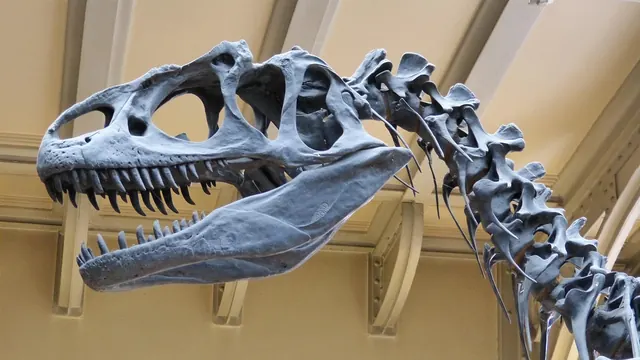
Scientists led by Curtin University in Australia have found fossilised red blood cells, along with chemical traces of blood, inside the limb bones of a 115-million-year-old dinosaur. The animal, Aratasaurus museunacionali, was a meat-eating theropod discovered in north-eastern Brazil.
Inside the tiny canals that once held blood vessels, the team found many mineralised red blood cells containing heme, part of the haemoglobin that carries oxygen. It is the first definitive chemical confirmation of haemoglobin-derived molecules in fossil dinosaur blood cells. Traces of collagen proteins were also found.
A mineral called hausmannite appears to have acted as a natural time capsule. The researchers think the dinosaur was buried quickly in low-oxygen sediment, which helped protect material that would normally have vanished. The study was published in the Proceedings of the National Academy of Sciences.